Leadership
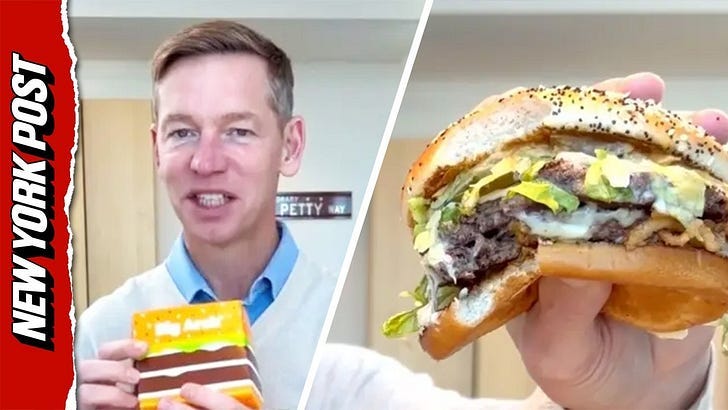
A video of Chris Kempczinski eating a McDonald’s burger is going viral online.
Not because people loved it. But because it felt painfully staged.
If you’ve seen it, you’ll know exactly what I mean.
He opens the box like he’s never seen the burger before. Takes the tiniest bite imaginable. And then calls it a “food product”. Ouch!!!
It’s so scripted it almost hurts to watch. And you can practically feel the PR team standing just out of frame.
The internet noticed immediately. People joked it looked like an AI clone. Others wondered if he’d ever actually eaten a McDonald’s burger before.
Brutal. But also incredibly revealing.
Because this moment captures something much bigger happening right now in leadership communication.
For years, executive communication followed a familiar formula.
Write the script.
Approve every word.
Film the polished video.
Publish something safe.
The result?
Content that sounds like it came from a communications team rather than a human being.
And people can now spot it instantly.
The trust gap online is growing. Audiences are far more sceptical than they used to be. When every executive post sounds the same, people start to question whether the person behind the account actually wrote it.
Or whether they believe it at all. And that’s where the real problem begins.
I spend a lot of time working with executive teams, helping them build their personal brands and show up more confidently online.
And the truth is, most leaders aren’t avoiding LinkedIn because they don’t care.
They avoid it because:
They don’t know what to say.
They don’t have time.
And it constantly falls to the bottom of the to-do list.
So what usually happens?
It gets handed to the communications team. And that’s where things start to break down. Because how can someone else tell your story?
How can they capture what you’re really thinking about a decision, a challenge, or a moment inside the business? How do they recreate the awkward pauses, the vulnerability, the small human details that actually make people connect?
When someone else writes everything for you, those moments disappear.
And ironically, those are the exact moments that cut through today.
To be clear, I don’t think leaders need to do this completely alone.
Support is helpful.
But there’s a big difference between support and scripting.
Support might look like:
A team helping shape your ideas into a post.
Someone turning your voice notes or stories into content.
An editor helping sharpen your thinking.
Scripting, on the other hand, removes the human. And that’s where trust starts to erode.
Gone are the days where executives can rely on perfectly scripted leadership content.
We’re entering something different now.
A much more human era of leadership.
Recently I ran a simple test that reinforced this for me.
I created 20 ads to test on Instagram.
Nineteen of them were beautifully designed. Polished. Professionally formatted. Great imagery. Yes, I was super proud of them and these were the kind of ads you’d expect to perform well.
The last one I filmed almost as an afterthought.
I was making a coffee in my kitchen. My hair was messy. There was no script. It was raw and completely real.
Guess which one performed best?
The messy coffee video.
By a long way.
Because it was relatable. It was warm, felt human and I showed the real side of me.
And that’s exactly what people responded to.
We’re living through a strange moment online.
AI is improving rapidly. Content production has never been easier. Everyone suddenly has access to the same tools.
Which means something interesting is happening.
Everything is starting to sound the same.
The more content gets produced, the more people crave something different.
Something human.
That’s why the leaders who are willing to show up with real stories, real reflections, and real perspective are the ones building trust right now.
Not because they’re polished, but because they’re believable.
Leadership visibility isn’t about self-promotion. I am not here to make everyone an influencer.
It’s about trust.
People want to understand the humans behind the companies they buy from, work for, and invest in.
They want to know:
What leaders actually think.
What they’re learning.
What decisions feel hard.
Not the perfectly scripted version.
They want the real one.
And the leaders who understand this shift now will have a huge advantage over the next decade.
Because trust isn’t built through corporate messaging.
It’s built through human leadership.
The McDonald’s video didn’t go viral because people hate burgers.
It went viral because people instinctively recognised something that felt inauthentic.
That reaction tells us something important and that the polish era of leadership content is ending.
And the leaders who learn to show up as real humans online will be the ones people trust most in the years ahead.
Ways to work with me
Want help activating your leadership team on LinkedIn?
I run a short program called Leading Voices that helps executives develop a clear voice, create content efficiently, and show up consistently.
It takes about three hours of their time and has helped leaders go from never posting to becoming recognised voices in their industry.
If you’d like to explore it for your team, just reply to this email.
This piece also went out to subscribers on Substack. If you want these as they land, subscribe on Substack or follow along on LinkedIn.
← Previous: Kindness, karma, and the ripple effects we forget to measure
Talk this through with an AI